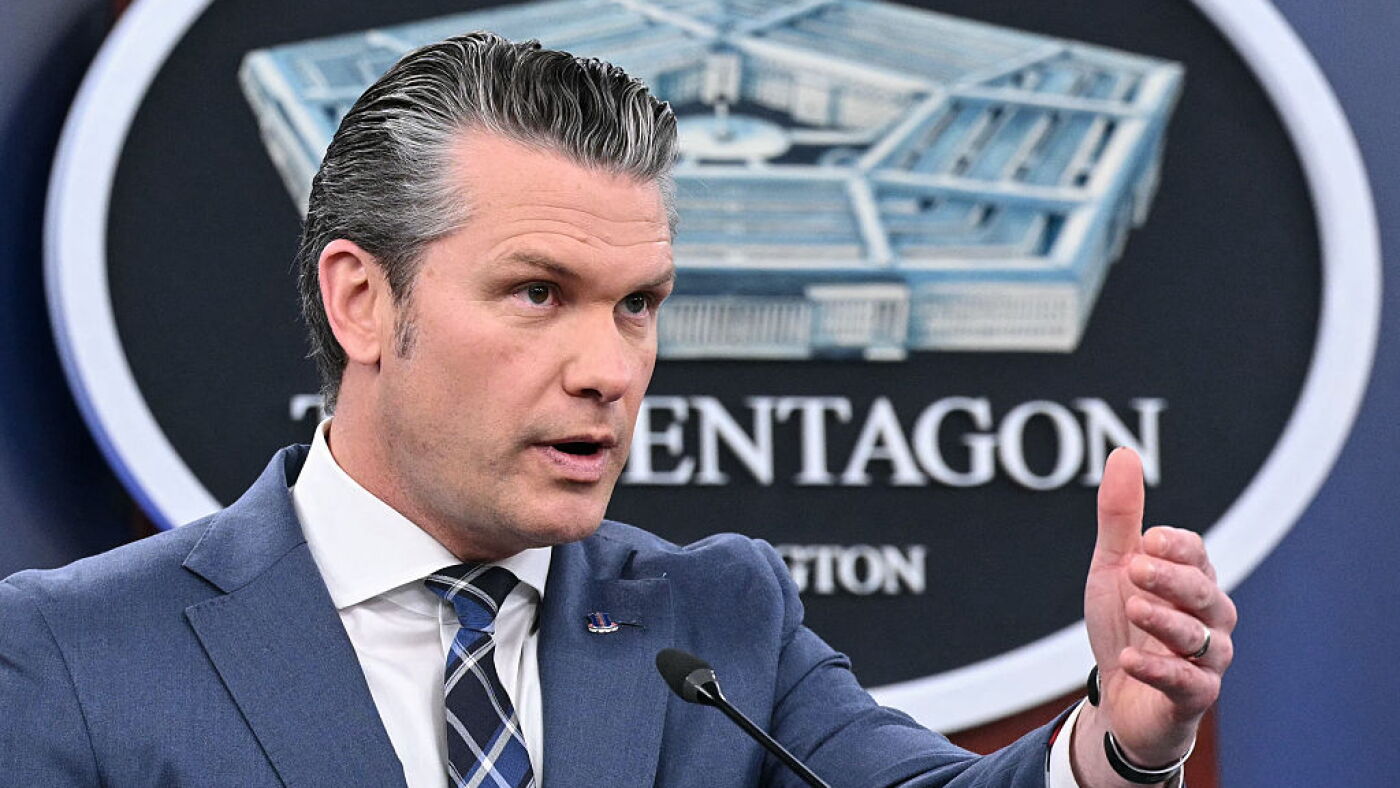
Thirty-three civil rights and advocacy organizations have challenged Defense Secretary Pete Hegseth over his alleged involvement in blocking military promotions for Black officers and women. The coalition includes the NAACP, the National Women’s Law Center, the ACLU and National Action Network.
The groups sent Hegseth a letter which was released to MS NOW on September 28. They said reporting on Hegseth’s “unprecedented interference” coincided with a decline in the share of women nominated for high-ranking promotions. According to the groups, that share is now at its lowest level in more than two decades. They also said many qualified Black candidates have had their opportunities blocked.
The groups urged Hegseth to comply with congressional oversight requests. “The American public deserves to know” whether his decisions comply with the law and are based on service members’ skills and experience, they wrote. Otherwise, they said, the decisions could be driven by racial and gender stereotypes.
The letter cites reporting that Hegseth intervened to block promotions for at least 40 senior officers, about half of whom were women or people of color. It breaks down the figure by military branch and calls the pattern “a grave abuse of power” at the expense of women and officers of color.
The signatories acknowledged that Hegseth has greater discretion over appointments to three- and four-star ranks. They nevertheless accused him of targeting women and Black leaders at those levels. They cited Admiral Sara Joyner and Rear Admiral Stephen D. Barnett as examples, saying both received exemplary recommendations. The letter says Joyner actively recruited women while Barnett recruited people of color.
The Pentagon’s response
Pentagon spokesperson Kingsley Wilson disputed the coalition’s claims in a statement to MS NOW. She said the network was “pushing the hoax” that Hegseth bases promotion decisions on race and gender.
“This is a lie and we have said so repeatedly,” she said. Her statement also criticized the network’s viewership and credibility.
Pentagon spokesperson Sean Parnell made similar denials in a statement to NPR in March. He called the reporting “fake news” and said promotions under Hegseth go to those who have earned them. He described the department’s approach as apolitical and unbiased.
Parnell also said on social media that the Pentagon “will never consider the color of a service member’s skin or their gender as a factor in promotions.”
How the controversy began
Military promotions to general and admiral ranks traditionally follow a set process. For one- and two-star ranks, selection boards of senior officers choose candidates before the list goes to the White House and then the Senate. Most three- and four-star positions do not use promotion boards.
NPR confirmed that Hegseth intervened to stop the promotions of four Army officers, including two Black men and two women, who were on track to become one-star generals.
Hegseth had taken steps to block or delay promotions for more than a dozen Black and female senior officers across all four military branches. Two officials described concerns within the military and White House that qualified officers were being stalled because of their race or gender. The report also noted that not all promotions for women or minority officers had been blocked or delayed during Hegseth’s tenure.
Hegseth has publicly accused the military of awarding promotions based on diversity rather than merit.
The cases of Sara Joyner and Stephen D. Barnett
An investigation published by The New York Times based on interviews with 15 current and former military and Trump administration officials found that Hegseth had blocked the promotions of at least 40 senior officers to general and admiral ranks that year. About half were women or members of minority groups.
Navy leadership considered Barnett the strongest candidate to lead the command overseeing Navy bases in the United States and abroad. Hegseth instead chose a white officer who had been the Navy leadership’s third choice.
Before recommending Barnett, senior Navy officials searched his public record for anything that might offend Hegseth. According to The New York Times, Barnett’s remarks were later cited as a reason to deny him the promotion. He is expected to retire and declined to comment.
Joyner, a three-star fighter pilot, was also considered for a higher-profile Pentagon position. She had spoken at events designed to encourage and mentor female aviators and submariners, which Hegseth’s team viewed as a problem.
The report said Gen. Dan Caine urged Hegseth to nominate Joyner and asked then-Navy Secretary John Phelan to help persuade him to reconsider. Their efforts failed.
Congressional pressure
Sen. Jack Reed of Rhode Island, the top Democrat on the Senate Armed Services Committee, said in March that removing four decorated officers from a promotion list based on race or gender would be “outrageous” and “illegal” if the reports were accurate. In June, Reed described the reported pattern as “unlawful and corrosive.”
Sen. Kirsten Gillibrand wrote to committee chair Roger Wicker asking him to convene a closed hearing on the matter.
A group of Democratic senators sent Hegseth a letter asking him to explain his decision-making and rationale for removing officers from promotion consideration. The letter sought legal and regulatory justifications through seven questions, including a demographic breakdown of the officers removed. It acknowledged that there can be valid reasons to remove officers from consideration but said public reports indicated Hegseth’s actions could be politically motivated.
Senators Cory Booker and Brian Schatz asked Department of Defense Inspector General Platte Moring to open an independent investigation. Their letter described the alleged intervention as “an unprecedented overreach.”